
The One Rule, and When It Bends
If your garage door has come off its track, stop operating it and keep everyone away from it until a technician looks at it. That's the rule for almost every situation, because a door that's derailed is being held up by forces it was never designed to handle this way, and those forces can let go without warning.
There are a couple of exceptions worth naming. If the door is already down and resting on the floor, fully off its track but not under tension, it's usually safe to leave alone and simply not use until repaired. And if a vehicle or falling limb just knocked the door partially off while it was open, the priority shifts from "don't touch it" to "get people and pets clear first," because a door hanging crooked overhead is the more immediate hazard.
How a Door Actually Jumps the Track
Garage doors run on a surprisingly simple system: steel rollers riding inside a formed track, held in alignment by brackets bolted to the door and the frame. When something pushes the door sideways, or a roller wears down enough to slip the lip of the track, the panel can pop partway or fully out of the channel.
In this part of South Carolina, a few things speed up that process. Heavy, humid summers followed by sudden ice mornings put tracks through repeated expansion and contraction, which loosens the bolts holding brackets in place. Pine debris and blown rain can build up grit inside the track, so rollers ride rough instead of smooth, putting more side-load on the hardware with every cycle. And a surprising number of off-track calls start with something mundane: a car bumper clipping the bottom panel, a basketball, a gust during a storm remnant pushing on a door that was already open. Any one of these can bend a track enough that the rollers no longer sit where they should.
How Bad This Gets
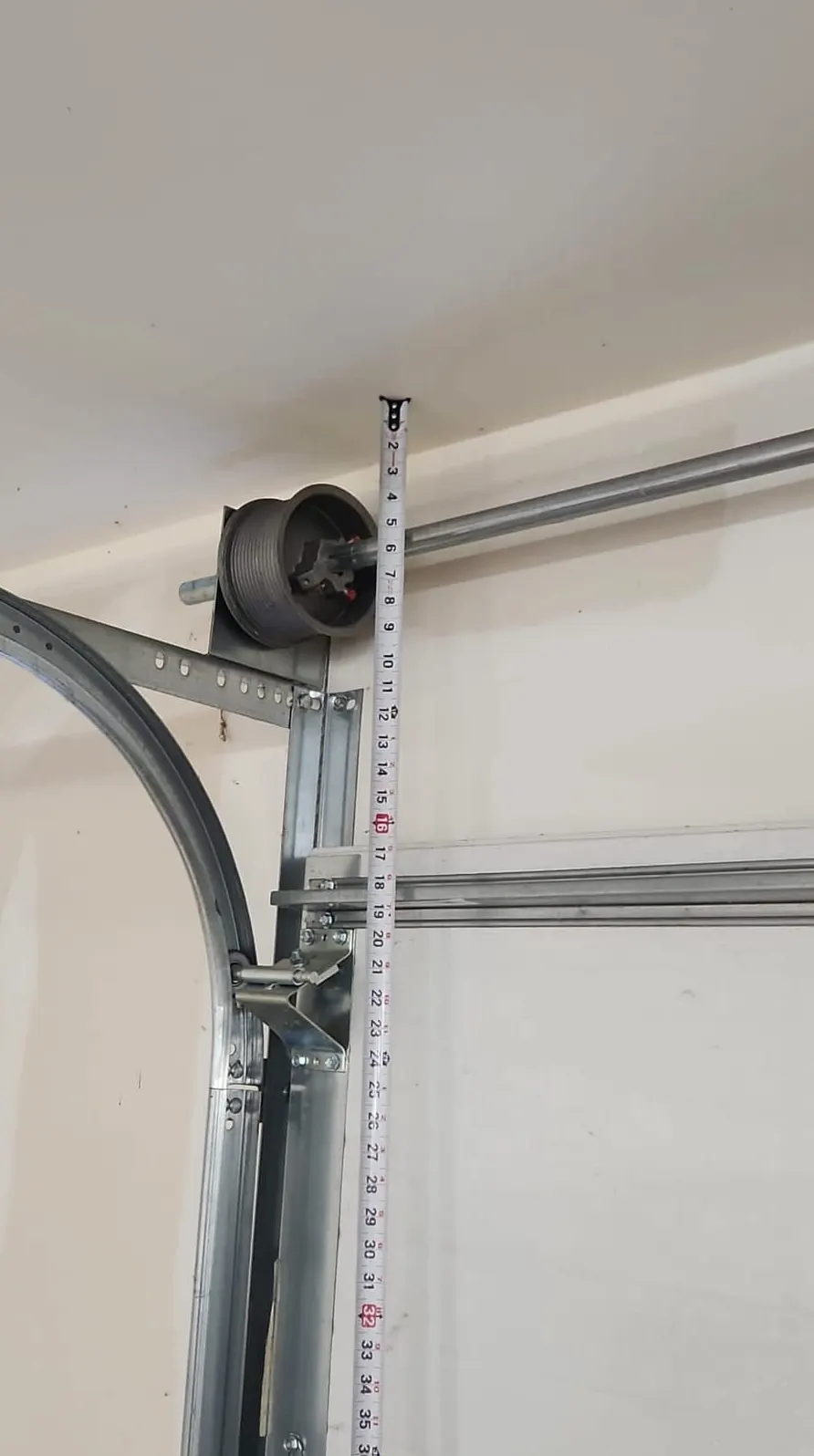
The danger isn't really the track, it's what's attached to it. A standard garage door is balanced by torsion or extension springs under heavy tension, and that tension is only safe when the door is moving along its intended path. Once a door is off-track, the spring system and the lift cables can be pulling against a door that's twisted or hanging unevenly. That mismatch is what causes the door to drop suddenly, swing outward, or have a cable snap under the uneven load. A loose door at that point can weigh more than a hundred pounds concentrated on one side, and it is not held by anything predictable.
There's a second layer of risk specific to doors with automatic openers. If the door is off-track and someone tries to run the opener anyway, the motor will keep pulling on a cable or arm that's fighting a jammed panel. That's a common way to burn out an opener motor, strip the drive gear, or yank a bracket clean out of the wood framing around the door opening, which turns a hardware repair into a structural one.
What Not to Touch
A few specific things make an off-track door worse, and they're worth naming directly:
- Don't pull or push the door back into the track by hand. It can look like it would slide right back in, but if a spring or cable is under load, the door can shift suddenly and take a hand or foot with it.
- Don't touch the springs or cables at all. These store enough energy to cause serious injury if they release while someone is working near them, and there's no reliable way to tell from the outside how much tension remains in a misaligned system.
- Don't run the opener to "see if it clears itself." If the door jumps the track, the opener should be considered off-limits until a technician has checked it.
- Don't prop the door open with a board or ladder to get your car out. A door resting on an improvised prop can shift without warning, especially if the spring tension is uneven.
What to Do Immediately
- Clear the area. Keep kids, pets, and vehicles away from the door's path, including underneath it if it's partway open.
- Disconnect the opener, but only if the door is fully down. Pull the manual release cord so the opener isn't trying to force movement, but only do this once the door is resting flat and not mid-cycle.
- Leave the door exactly where it is. Resist the urge to inspect it closely or lift any panel to look underneath. A visual check from a few feet away is enough to describe the problem to a technician over the phone.
- Check for obvious causes without moving anything. Note whether a roller is visibly out of the track, whether the track itself is bent or pulled away from the wall, or whether something like a fallen branch is wedged in the mechanism. This helps the technician bring the right parts on the first visit.
- Secure the garage another way if needed. If the door won't close and you need the opening secured overnight, a temporary barricade from the inside is safer than forcing the door.
When to Call Columbia Garage Door Service
Any door that's come off its track should get a same-call diagnosis, not a wait-and-see. Our technicians check roller and track alignment, spring tension, and cable condition together, because fixing the visible track problem without checking the hidden tension issue is how the same door ends up off-track again within weeks. In many cases a straightforward Garage Door Repair visit realigns the track and replaces worn rollers or bent brackets. If the inspection turns up a spring that's stretched, rusted, or clearly mismatched to the door's weight, we'll walk you through Spring Replacement before it becomes the reason for a second, more dangerous call.
If your garage door in Columbia, Irmo, Lexington, Blythewood, Elgin, Chapin, West Columbia, or Cayce has jumped its track, don't wait on it. Call Columbia Garage Door Service and we'll get a technician out to sort it safely and get your door back on track for good.