
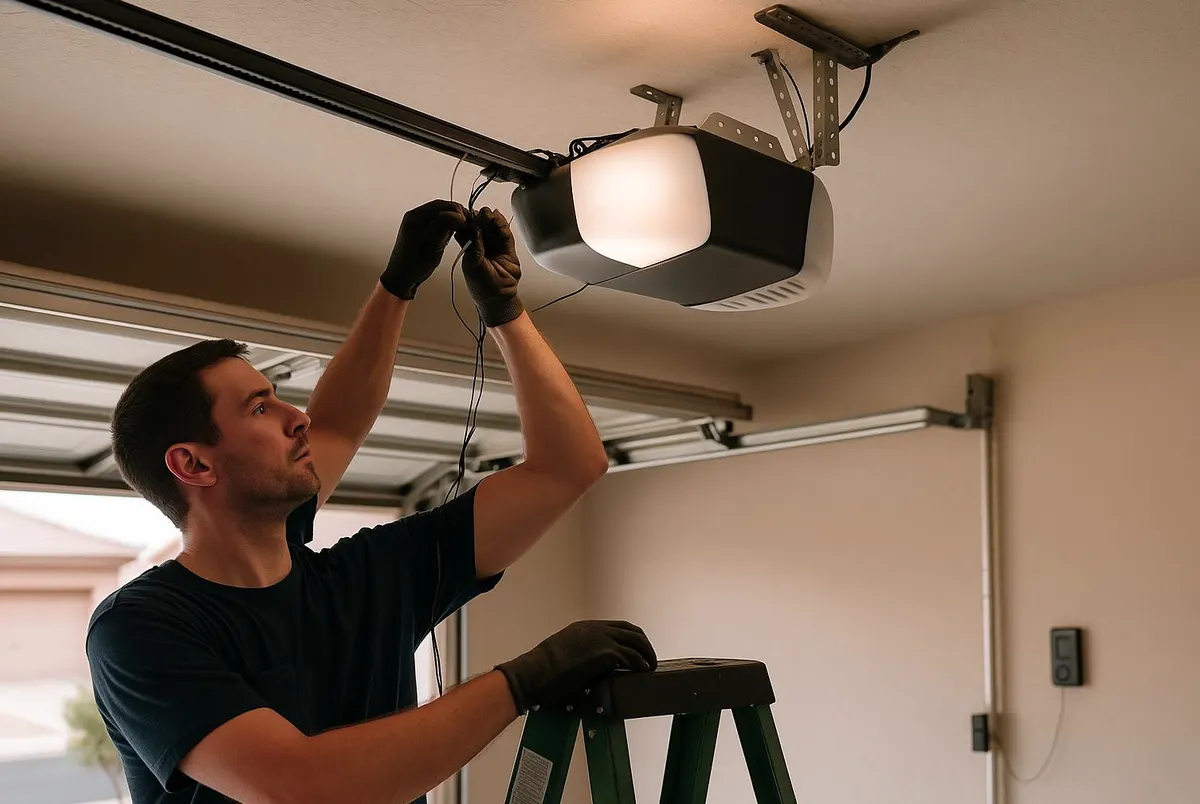
As a rule of thumb, the type of noise points to the part: grinding and squealing usually mean metal-on-metal friction somewhere in the moving system, popping usually means something under tension is shifting or failing, and rattling usually means hardware has worked loose. The exceptions are weather-driven: a cold snap can make old grease seize up and sound like grinding wear that isn't really there yet, and heavy humidity can swell a wood door or door frame just enough to produce a rattle that has nothing to do with loose bolts. Here's how to tell the difference.
Grinding
Grinding sounds like metal scraping metal — a deep, continuous scrape that runs through most or all of the door's travel, sometimes paired with a vibration you can feel through the door itself.
- Worn or cracked rollers. Nylon rollers wear flat spots over years of cycling, especially in garages that collect pine debris and dust around the track. The fix is straightforward roller replacement and a fresh application of lubricant to the track.
- Dirty or rusted track. Pollen and humidity leave a gritty film inside the track that grinds against rollers like sandpaper. Cleaning the track and relubricating often solves this without replacing parts.
- Worn opener gear. On chain-drive openers, the gear-and-sprocket assembly inside the motor housing wears down over time and grinds as it strips. This means opening the opener housing and replacing the gear kit.
- Bent track. If a roller is grinding at the same exact spot every cycle, the track itself may be bent — often from a car bumping it or years of minor stress. This requires realigning or replacing that section of track.
Squealing
Squealing is a higher-pitched sound, often loudest when the door first starts moving or at one specific point in the cycle.
- Lack of lubrication. This is the most common cause and the easiest fix — hinges and rollers that haven't been lubricated in a year or more will squeal as metal parts rub dry. A proper garage door lubricant (not household oil or WD-40, which attracts grit) usually quiets it within one application.
- Worn hinges. If lubrication doesn't fix it, the hinge pins themselves may be worn oval instead of round, which means replacement rather than just oiling.
- Dry torsion spring coils. Springs that haven't been serviced can squeal as the coils twist against each other. Lubricating the spring (done carefully, since it's under tension) often resolves this.
- Track misalignment pinching the rollers. If one side of the door is squealing more than the other, the track on that side may be out of alignment, pinching the roller as it passes. This needs realignment, not lubrication.
Popping
Popping is a sudden bang or crack, usually a single loud sound rather than a continuous noise, and it's the one you should take most seriously.
- Torsion spring stress or failure. A pop is often the first warning sign that a spring is cracked or about to break completely. If you hear a loud bang and the door suddenly feels heavier to lift (or won't budge), stop using it — this is a job for spring replacement, not a quick fix, and it's dangerous to attempt yourself.
- Fraying or slipping cable. A cable that's starting to fray can catch and snap against the drum, producing a sharp pop before it fully fails.
- Hardware flexing under tension. Loose brackets or mounting plates can pop audibly as the door's weight shifts against them during opening and closing.
- Panel expansion from humidity. On wood or composite doors, heavy rain and humidity swings can cause a panel to expand and pop against its frame. This is cosmetic and seasonal rather than a sign of hardware failure, but it's worth distinguishing from a spring-related pop since the response is completely different.
Rattling
Rattling is a looser, buzzing sound that runs through the whole cycle rather than happening at one moment, and it's usually the least urgent of the four — but it's also an early warning that something will need attention soon.
- Loose hardware. Hinge bolts, track bolts, and roller brackets loosen gradually from years of vibration. A full tightening pass with a wrench is often all that's needed.
- Loose chain or belt tension on the opener. A chain-drive opener with a sagging chain will rattle audibly against its rail; this is a quick tension adjustment.
- Worn roller brackets. If tightening bolts doesn't quiet things down, the brackets holding the rollers to the door may be worn enough to need replacing.
- General hardware fatigue on older doors. Doors that have been in service for many years accumulate small amounts of play across several components at once, which is why an older door can rattle even after one or two parts are tightened — it may need a fuller hardware check rather than a single fix.
When to Call Columbia Garage Door Service
If you're hearing a loud pop followed by the door feeling heavy or refusing to move, stop using the door and call us — this is almost always a spring issue, and our Spring Replacement service handles it safely with the right tools and tension equipment, which isn't something to attempt on your own. For grinding, squealing, or rattling that doesn't clear up with basic tightening, our Garage Door Maintenance service covers a full inspection of rollers, hinges, track alignment, and opener components, so small wear gets caught before it turns into a stuck door on a cold morning or a spring that lets go without warning.
If your garage door in Columbia, Irmo, Lexington, Blythewood, Elgin, Chapin, West Columbia, or Cayce is making a noise that wasn't there a few months ago, give Columbia Garage Door Service a call — we'll tell you straight what's wearing out and what can wait.