
Your Garage Door Springs Are Doing More Work Than You Think
Every time you open or close your garage door, the springs are doing the heavy lifting — literally. A standard two-car garage door can weigh between 150 and 250 pounds, and the springs are responsible for counterbalancing all of that weight. Without functioning springs, your garage door opener alone can't move the door, and attempting to open it manually becomes dangerous.
For homeowners in Columbia, SC, where we rely on our garages daily — whether it's parking the car, storing tools, or heading out to work — a broken spring can bring your entire routine to a halt. The good news is that spring failure doesn't have to catch you off guard. Understanding the lifespan of your springs and knowing the warning signs can help you stay ahead of the problem.
How Long Do Garage Door Springs Last?
The lifespan of a garage door spring is measured in cycles. One cycle equals one full open-and-close of the door. Most standard torsion springs are rated for approximately 10,000 cycles, which translates to roughly 7 to 10 years of average use.
However, that estimate depends on several factors:
- Frequency of use: A family that opens and closes the garage door four to six times a day will wear out springs faster than a household that uses it twice daily.
- Spring quality: Not all springs are created equal. Higher-grade springs rated for 20,000 or even 25,000 cycles are available and can last significantly longer.
- Climate and humidity: Here in Columbia, our hot, humid summers can accelerate rust and corrosion on metal springs, shortening their effective lifespan.
- Maintenance habits: Springs that are regularly lubricated and inspected tend to last longer than those that are neglected.
If your garage door springs are approaching the 7-year mark and you haven't had them inspected, it's a smart time to call a professional.
Torsion Springs vs. Extension Springs: What's the Difference?
There are two main types of garage door springs, and knowing which type you have helps you understand what to expect when it's time for a replacement.
Torsion Springs
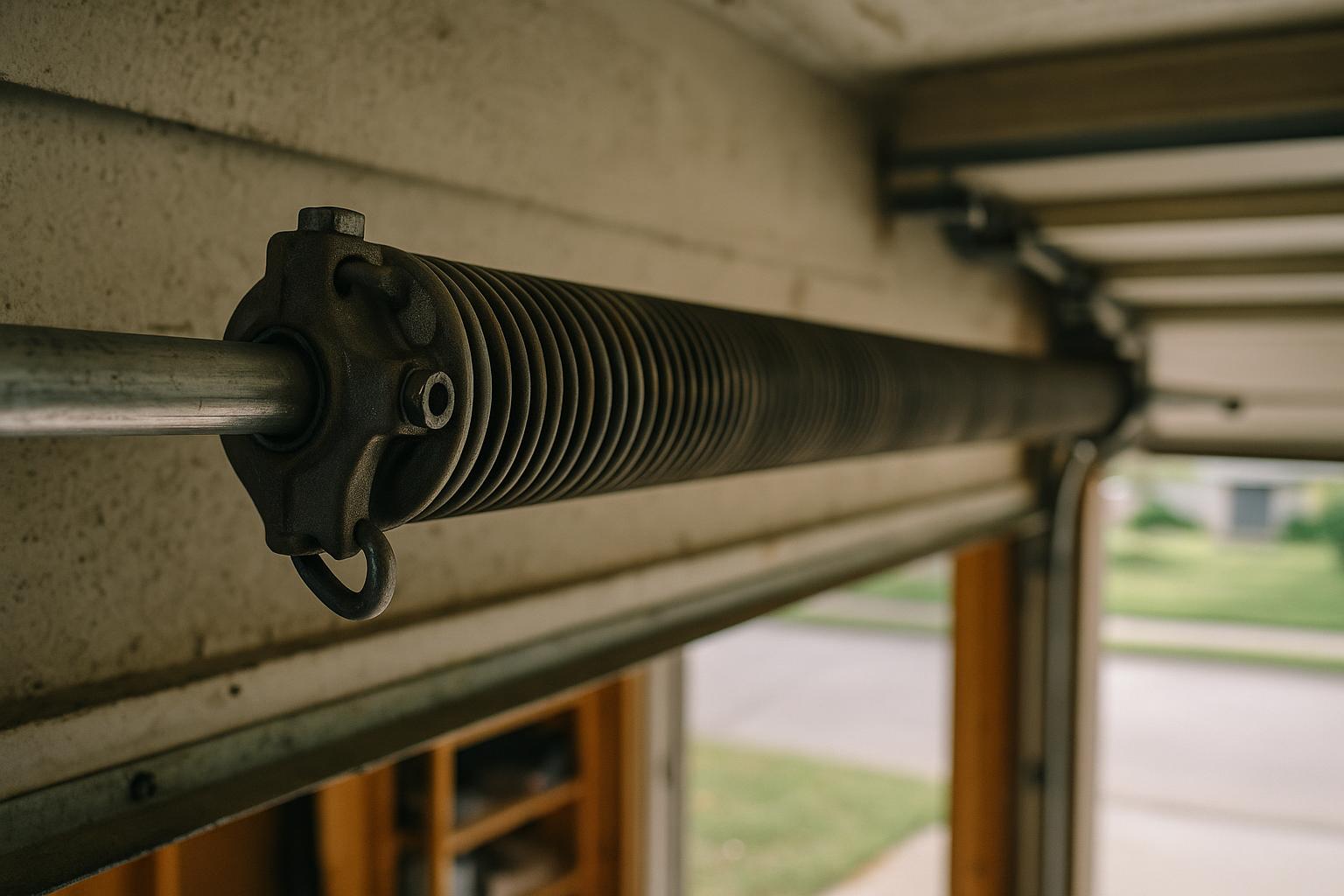
Torsion springs are mounted on a metal shaft directly above the garage door opening. They use torque to lift the door and are the more common type found in modern residential garage doors. Torsion springs are generally considered safer and more durable than extension springs, and they provide smoother, more balanced operation.
Extension Springs
Extension springs run along the horizontal tracks on either side of the door. They stretch and contract to assist with lifting. Extension springs are typically found on older or lighter garage doors. They're more prone to wear and can be hazardous if they snap without safety cables in place.
Regardless of which type your garage door uses, both will eventually wear out and need replacement. A qualified technician can assess your setup and recommend the best option for your home.
Warning Signs Your Garage Door Springs Are Failing
Springs rarely fail without giving some warning first. Here are the most common signs that your garage door springs are nearing the end of their life:
- The door feels heavier than usual: If your garage door seems difficult to lift manually or your opener is straining, the springs may be losing tension.
- Visible gaps in the spring coils: A torsion spring that's stretched or has a visible gap between coils is on its way out.
- The door opens unevenly: If one side of the door rises faster than the other, one of the springs may be weaker or broken.
- Loud bang from the garage: A sudden, loud noise — like a firecracker — often means a spring has snapped. Many Columbia homeowners report hearing this sound and finding their door stuck in the closed position.
- The door won't stay open: A properly balanced door should stay in place when opened halfway. If it slides down, the springs aren't providing enough counterbalance.
- Rust or corrosion on the springs: Surface rust increases friction and weakens the metal over time. This is especially common in areas with higher humidity like the Midlands of South Carolina.
Can You Replace Garage Door Springs Yourself?
We understand the DIY spirit — and there are plenty of garage door tasks that handy homeowners can tackle. Spring replacement is not one of them.
Garage door springs are under extreme tension. A torsion spring, in particular, stores a tremendous amount of energy, and if it's improperly handled, it can cause serious injury or even death. Every year, emergency rooms across the country treat injuries from DIY spring replacement attempts gone wrong.
Professional garage door technicians have the specialized tools, training, and experience to replace springs safely and efficiently. They'll also ensure the new springs are properly calibrated for your door's weight, which is critical for smooth operation and the longevity of your opener.
Should You Replace Both Springs at Once?
If your garage door has two torsion springs and one breaks, we strongly recommend replacing both at the same time. Here's why:
- The second spring is the same age. If one spring has reached the end of its cycle life, the other one isn't far behind.
- Balanced operation. New springs on both sides ensure even tension and smoother door movement.
- Cost savings. The labor involved in replacing springs is the same whether you're doing one or two. Replacing both at once saves you a second service call down the road.
This is one of those situations where a small additional investment now can save you time, money, and frustration later.
How Regular Maintenance Extends Spring Life
One of the best things you can do for your garage door springs is schedule regular maintenance. A simple annual tune-up can add years to the life of your springs and help you catch small problems before they become big ones.
During a maintenance visit, a technician will typically:
- Lubricate the springs, hinges, rollers, and tracks
- Inspect springs for rust, wear, and proper tension
- Test the door's balance and alignment
- Check the opener's safety features and settings
- Tighten hardware that may have loosened from vibration
For homeowners in Columbia, Irmo, Lexington, and the surrounding areas, scheduling maintenance in the spring or fall — when temperatures are moderate — is ideal. It's a quick, affordable service that pays for itself many times over.
Don't Wait for a Breakdown
A broken garage door spring is one of the most common service calls we receive at Columbia Garage Door Service, and it's almost always preventable with a little awareness and proactive care. If your springs are aging, showing signs of wear, or if it's simply been a while since your last inspection, give us a call.
We serve homeowners and businesses throughout Columbia, Blythewood, Elgin, Chapin, and the greater Midlands area. We'll give you an honest assessment, fair pricing, and get your garage door back to working safely — because that's what neighbors do.