
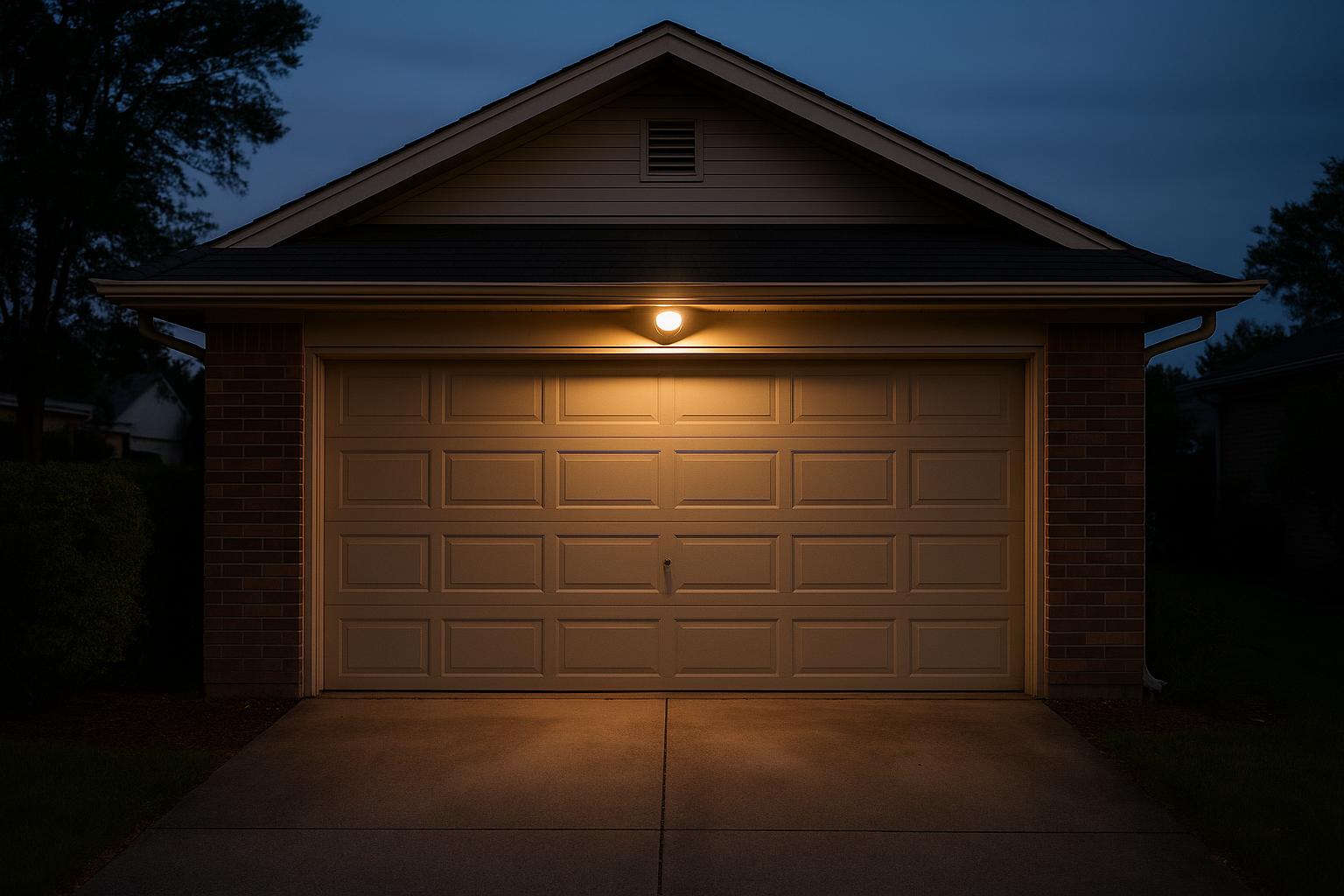
Your Garage Door Might Be Your Home's Weakest Link
Most homeowners in Columbia think about their front door locks, window latches, and maybe even a security camera system. But there's one entry point that often gets overlooked — the garage door. It's the largest moving part of your home and, for many families, it's used more than the front door itself.
An outdated, poorly maintained, or improperly secured garage door can give intruders an easy way in. Whether your garage is attached to your house or stores valuable tools and equipment, it's worth taking a few minutes to evaluate how secure it really is.
Here's how to identify common garage door security risks and what you can do about them.
1. Your Garage Door Opener Uses Outdated Technology
If your garage door opener is more than 15 to 20 years old, there's a good chance it uses a fixed-code system. These older openers transmit the same radio frequency code every time you press the remote button. The problem? Thieves can use inexpensive devices to capture and replicate that signal, giving them access to your garage whenever they want.
Modern garage door openers use rolling code technology, which generates a new, unique code every time the remote is activated. This makes it virtually impossible for someone to copy your signal and break in.
If you're still using an older opener, upgrading to a new model is one of the most effective security improvements you can make. It's a straightforward installation that many Columbia homeowners pair with routine maintenance for added peace of mind.
2. The Emergency Release Is Accessible from Outside
Every garage door has an emergency release cord — that red handle hanging from the opener track. It's designed to let you manually open the door during a power outage. Unfortunately, burglars know about it too.
On some older garage doors, a determined intruder can use a coat hanger or thin tool to reach through the top of the door and pull the emergency release, disengaging the opener and allowing them to lift the door by hand. This technique is well-documented and takes only seconds.
Here's what you can do:
- Install a garage door shield — a simple plastic guard that blocks access to the emergency release from outside.
- Use a zip tie on the release lever — this adds enough resistance to prevent a quick pull from a tool but can still be broken manually from inside in a real emergency.
- Upgrade to a door with better sealing — newer garage doors fit more tightly against the frame, making it much harder for anyone to slip a tool through gaps.
3. You Leave the Garage Door Open or Partially Open
It sounds obvious, but leaving your garage door open — even for a short time — is one of the most common security mistakes homeowners make. In neighborhoods across Columbia, Irmo, and Lexington, it's not unusual to see garage doors left wide open while families are in the backyard or running a quick errand.
An open garage is an invitation. Thieves can walk in, grab tools, bikes, or electronics, and be gone in under a minute. If your garage connects to your house through an interior door, the risk is even greater.
Consider these solutions:
- Set a timer on your opener. Many modern garage door openers have an auto-close feature that shuts the door after a set period of time.
- Use a smart garage door controller. These devices connect to your phone and send alerts when the door has been left open. Some even let you close it remotely from anywhere.
- Make it a habit. Before you go to bed or leave the house, do a quick visual check. It takes two seconds and can prevent a major headache.
4. The Door Itself Is Worn Out or Damaged
A garage door with rotting wood panels, rusted-out sections, or visible gaps along the edges isn't just an eyesore — it's a security vulnerability. Weakened materials are easier to force open, and gaps around the frame can give intruders leverage or a line of sight into your garage.
Even dents and warping can compromise how well the door sits in its tracks. If the door doesn't close flush against the ground or the frame, it may be possible to pry it open with basic tools.
Regular maintenance goes a long way toward catching these issues early. But if your door is severely damaged or past its prime, a full replacement might be the smarter long-term investment — both for security and curb appeal.
5. There's No Lock on the Interior Door
If your garage is attached to your home, the door connecting the garage to your living space is a critical security checkpoint. Many homeowners treat this like an interior door and leave it unlocked — or worse, use a flimsy hollow-core door with no deadbolt.
If someone gains access to your garage, that interior door is the last line of defense between them and your family. Treat it like an exterior door:
- Install a solid-core door
- Add a quality deadbolt lock
- Make sure the door frame is reinforced
6. You Don't Have Lighting Around the Garage
Darkness is a burglar's best friend. If your garage area isn't well-lit, it's an easier target after sundown. Motion-activated lights near the garage door and along the driveway are an affordable deterrent that can make a real difference.
Many homeowners in Blythewood, Chapin, and Elgin have larger properties with detached garages set farther from the house. In these cases, good exterior lighting is especially important since the garage may not be visible from inside the home.
7. You Haven't Changed the Opener Code After Moving In
When you buy a home, you change the locks on the doors. But how many people think to reprogram the garage door opener? The previous owners — and anyone they gave a remote to — could still have access to your garage.
Reprogramming your opener is usually a quick process outlined in the owner's manual. If you're not sure how to do it or can't find the manual, a local garage door technician can handle it in minutes during a service call.
Take Action Before There's a Problem
Garage door security isn't something most people think about until something goes wrong. But a few simple upgrades and habit changes can make your home significantly safer.
If you're in Columbia or the surrounding areas and you're not sure whether your garage door is as secure as it should be, we're happy to take a look. At Columbia Garage Door Service, we help homeowners evaluate their garage doors, recommend practical upgrades, and handle everything from opener replacements to full door installations. Give us a call — we'll make sure your garage door is working for you, not against you.