
When Your Garage Door Starts Talking, You Should Listen
You press the button on your garage door opener, and instead of the smooth, quiet operation you're used to, you hear something unsettling — a loud grinding, a high-pitched squeal, or a rhythmic banging that makes the whole garage vibrate. It's easy to shrug off unusual garage door noises as just "one of those things," but the truth is that your garage door is trying to tell you something.
As a homeowner in Columbia, your garage door is one of the largest moving parts of your home. It goes up and down more than a thousand times a year in most households. That kind of use creates wear and tear, and strange noises are often the first warning sign that something needs attention. Ignoring them can lead to more expensive repairs — or even a safety hazard.
Let's break down the most common garage door noises, what causes them, and what you should do about each one.
Grinding or Scraping Sounds
A grinding or scraping noise is one of the most common complaints we hear from homeowners across Columbia and the surrounding areas. This sound usually points to one of a few issues:
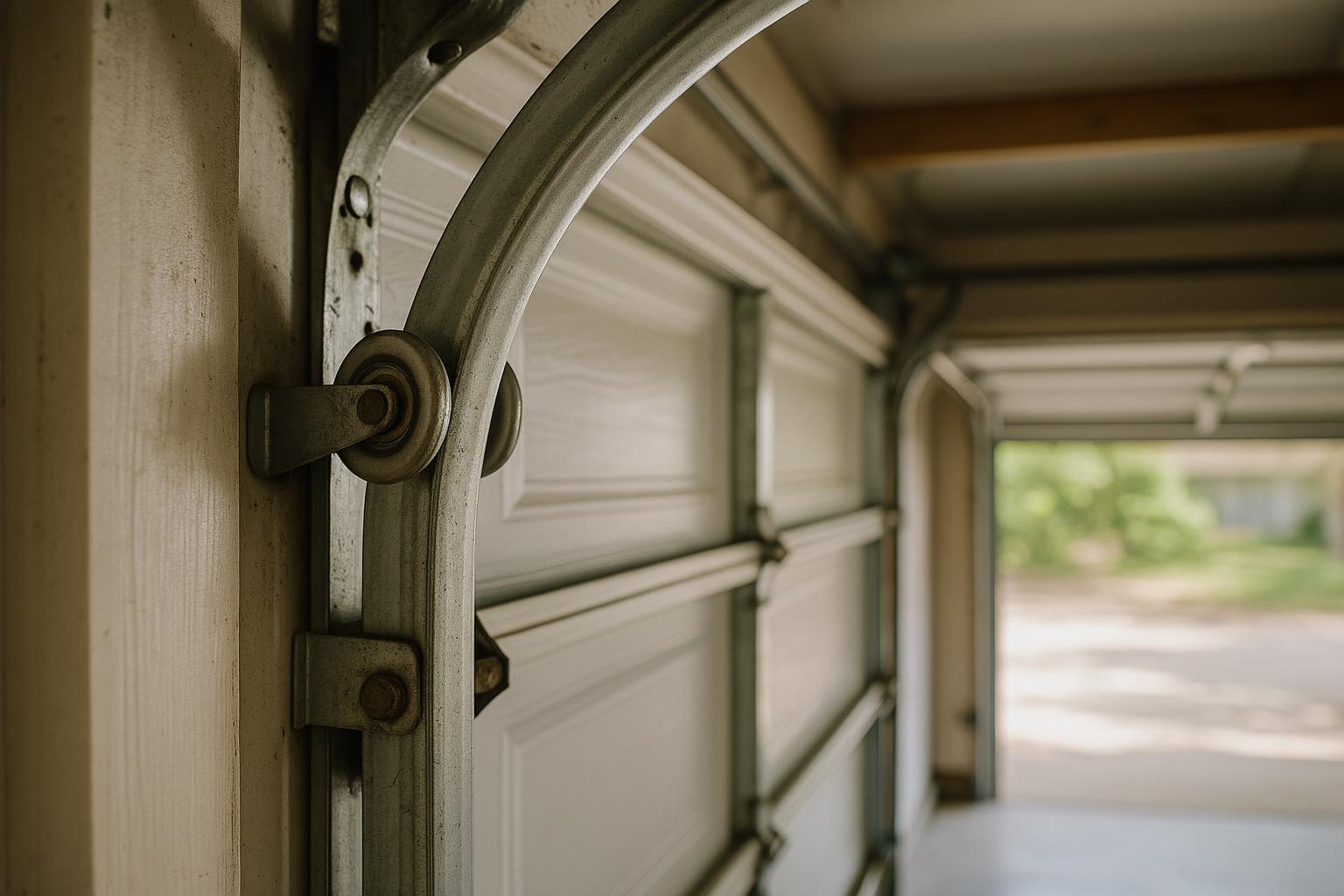
- Worn rollers: Metal rollers can wear down over time, especially if they haven't been lubricated regularly. As the metal deteriorates, the rollers grind against the track instead of gliding smoothly. Nylon rollers are quieter and last longer, and upgrading to them is a relatively affordable fix.
- Misaligned tracks: If the vertical or horizontal tracks have shifted even slightly, the door panels can scrape against them as the door moves. This not only creates noise but also puts extra stress on the opener and other hardware.
- Debris in the tracks: Leaves, dirt, small rocks, and even insect nests can accumulate in your garage door tracks over time. This is especially common during Columbia's warmer months when doors tend to stay open longer.
If you hear grinding, start by visually inspecting the tracks for obvious obstructions. But if the tracks appear bent or the rollers look worn, it's best to have a professional take a look before the problem gets worse.
Squealing or Screeching Noises
A high-pitched squeal or screech is hard to ignore — and you shouldn't try to. This type of noise typically means metal is rubbing against metal without proper lubrication. The most common culprits include:
- Hinges: The hinges that connect your garage door panels pivot every time the door opens and closes. Without lubrication, they'll start to squeal.
- Torsion spring coils: The torsion springs above your garage door bear an enormous amount of tension. When they're dry, the coils can screech as they wind and unwind.
- Bearing plates: The bearing plates at the top of your door also need regular lubrication to function quietly.
The fix is often straightforward: apply a garage door-specific lubricant (not WD-40, which is a solvent, not a lubricant) to the hinges, rollers, springs, and bearing plates. We recommend doing this at least twice a year. However, if the squealing persists after lubrication, there may be a deeper mechanical issue that needs professional diagnosis.
Banging or Popping Sounds
Loud bangs or pops can be alarming, and for good reason. These noises can indicate:
- Broken or loose hardware: Nuts, bolts, and brackets can loosen over time due to the constant vibration of the door's operation. A loose bracket can cause the door to jerk or pop as it moves along the track.
- Panel issues: If a panel is damaged, warped, or coming loose from the rest of the door, it can create a banging sound as the door transitions between sections of the track.
- Torsion spring problems: A loud, singular bang — almost like a gunshot — coming from your garage when the door isn't even in use is a classic sign that a torsion spring has snapped. This is a serious issue that requires immediate professional repair. Never attempt to replace or adjust torsion springs yourself, as they are under extreme tension and can cause severe injury.
Rattling or Vibrating Sounds
A rattling noise often sounds less dramatic than a bang, but it still deserves your attention. Common causes include:
- Loose chain or belt on the opener: If you have a chain-drive opener, the chain can loosen over time and slap against the rail as the door moves. Belt-drive openers can develop similar issues, though they're generally quieter overall.
- Loose nuts and bolts: The constant motion of your garage door can gradually vibrate hardware loose. A simple tightening of all visible nuts and bolts can sometimes eliminate the rattle entirely.
- Worn opener components: If your garage door opener is more than 10 to 15 years old, internal components like gears and motor mounts can wear out, creating a vibrating or rattling sound during operation.
For homeowners in Irmo, Lexington, Blythewood, and other communities near Columbia, seasonal temperature swings can accelerate these issues. Metal components expand and contract with the heat and humidity of South Carolina summers and the cooler winter months, which can loosen connections faster than you might expect.
Humming Without Movement
If you press your garage door opener button and hear the motor humming but the door doesn't move, the problem is likely one of the following:
- A stripped gear inside the opener: The main drive gear in your opener can strip over time, especially if the door is heavy or unbalanced. The motor runs, but it can't transfer power to the door.
- A locked or obstructed door: Check to make sure the manual lock on the door isn't engaged and that nothing is physically blocking the door from moving.
- A disconnect switch that's been activated: Most openers have an emergency release cord. If it's been pulled, the door is disconnected from the opener and will need to be re-engaged.
A humming motor that can't move the door is working harder than it should, which can burn out the motor entirely if left unaddressed.
When to Call a Professional
Some garage door noises have simple fixes — a little lubrication, tightening a few bolts, or clearing debris from the tracks. But many noises point to problems that require the tools, training, and experience of a professional technician. Here's a good rule of thumb:
- DIY-friendly: Lubricating moving parts, tightening visible hardware, and clearing track obstructions.
- Call a pro: Anything involving springs, cables, track realignment, opener motor repair, or panel replacement.
Garage doors are heavy — most residential doors weigh between 150 and 250 pounds — and the hardware that supports them is under significant tension. Attempting repairs beyond basic maintenance can put you at risk of injury or cause further damage to the door system.
Keep Your Garage Door Running Quietly in Columbia
Strange noises from your garage door aren't just annoying — they're early warnings. Addressing them promptly can save you from more costly repairs down the road and extend the life of your entire garage door system.
At Columbia Garage Door Service, we help homeowners and businesses throughout Columbia, Chapin, Elgin, and the surrounding communities diagnose and fix noisy garage doors every day. Whether it's a simple tune-up or a more involved repair, we show up on time, explain what we find in plain language, and get your door running smoothly again.
If your garage door is making a noise that doesn't sound right, don't wait for it to become a bigger problem. Give us a call and let us take a look.