
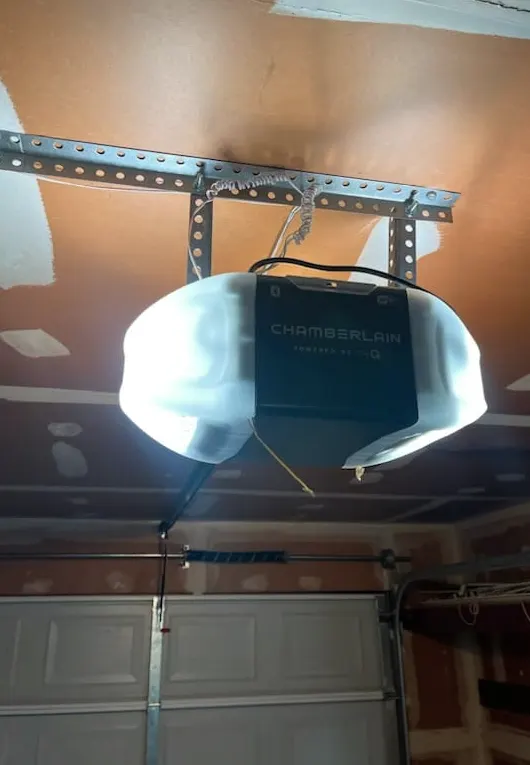
The Mistake: Patching the Same Opener Every Year
When an opener starts acting up, the instinct is almost always to call for a small fix. A new remote battery here, a sensor realignment there, maybe a capacitor swap for sixty or eighty dollars. Each individual repair feels cheap compared to the idea of replacing the whole unit, so homeowners keep choosing the smaller number over and over. It is an understandable choice in the moment, but it is also how a ten-year-old opener turns into a five-year science project, with a service call every spring and a growing pile of small invoices that eventually add up to more than a new unit would have cost.
What a Repair Actually Fixes
Not every opener problem means the unit is dying. Plenty of issues are isolated and genuinely worth repairing on their own:
- Misaligned safety sensors causing the door to reverse or refuse to close, often from a bump, a spider web, or pollen film across the lens
- Worn drive belts or chains that slip or sag, especially on older chain-drive units
- Remote or keypad failures from dead batteries or corroded contacts
- Loose hardware or a misadjusted limit switch causing the door to stop short or reverse unexpectedly
These are cheap, quick, and don't call the rest of the unit's lifespan into question. The trouble starts when the core components are failing: a stripped nylon drive gear, a dying logic board, a motor that labors and overheats, or a unit old enough that replacement parts are hard to source at all.
What Replacement Actually Buys You
A new opener isn't just a working motor. Most current units bring real upgrades that an aging opener simply can't offer:
- Rolling code security instead of older fixed-code signals that can be captured and replayed
- Battery backup that keeps the door operable during a power outage, which matters when storm remnants roll through and knock out power for hours
- Surge-resistant circuitry, since logic boards on older openers are a common casualty of lightning and voltage spikes during summer thunderstorms
- Smartphone connectivity and smarter reversal sensors that reduce nuisance behavior from humidity, pollen buildup, and minor misalignment
The Climate Factor
Openers here don't fail in a vacuum. Heavy humidity and pollen coat sensor lenses and photo-eye wiring, which shows up as random reversals that look like a failing unit but are really just dirty contacts. Summer storms send voltage spikes through the circuit, which is the single most common cause of a logic board dying with no warning. Ice mornings put extra strain on an opener that's forcing a door with stiffened springs or a cold-tightened track, and that strain lands squarely on the drive gear and motor. None of this means an opener needs to be new, but it does mean that a unit already showing some wear is more likely to hit a breaking point here than in a milder climate.
The Five-Year Math
Here's how the two paths tend to compare over five years, using typical national repair and replacement ranges rather than a single quoted price:
- Repair-only path: two to three service calls over five years at roughly $100–$300 each for sensor, gear, or board issues, totaling $300–$900, followed by an eventual full replacement anyway once a core part fails, typically $300–$600 installed. Total: roughly $600–$1,500, plus the inconvenience of a door that's unreliable in the meantime.
- Replace-now path: one installed cost of roughly $300–$600, followed by routine maintenance only, maybe a $100 tune-up or battery replacement somewhere in year three or four. Total: roughly $400–$700, with a door that opens reliably during storms and power blips along the way.
The repair-only path isn't irrational for a unit that's three or four years old with one isolated issue. It becomes expensive specifically when it's applied to a unit already past the ten-to-twelve-year mark, where every fix is a stopgap on a motor and gear set that are simply worn out.
What's Typical for Homes in This Area
A lot of homes here, especially older housing stock, are still running openers original to the house or inherited from a previous owner. That often means a chain-drive unit well past a decade of use, no battery backup, and fixed-code remotes that are a known security weak point. If that describes your opener and you're already looking at a repair for a core component rather than a simple sensor or remote fix, replacement is usually the better financial call, not just the more convenient one.
Quick Decision Guide
- Opener is under 8 years old and the issue is sensors, remotes, or a belt: repair it
- Opener is chain-drive, over 10 years old, and the motor or gear is involved: replace it
- You've had two or more service calls in the past year: replace it
- You lose opener function during power outages and want battery backup: replace it
When to Call Columbia Garage Door Service
If you're not sure which side of that line your opener falls on, that's exactly what a service call should settle. Columbia Garage Door Service can diagnose whether you're looking at a straightforward sensor or circuit fix through Garage Door Opener Installation & Repair, or whether the unit's core components are worn enough that replacement is the cheaper path over the next five years. If regular tune-ups have been skipped for a while, our Garage Door Maintenance visits also catch small sensor and alignment issues before they turn into a late-night no-open emergency.
If your opener in the Columbia, Irmo, Lexington, Blythewood, Elgin, Chapin, West Columbia, or Cayce area is due for an honest look, give us a call and we'll tell you straight which way the math points for your door.