
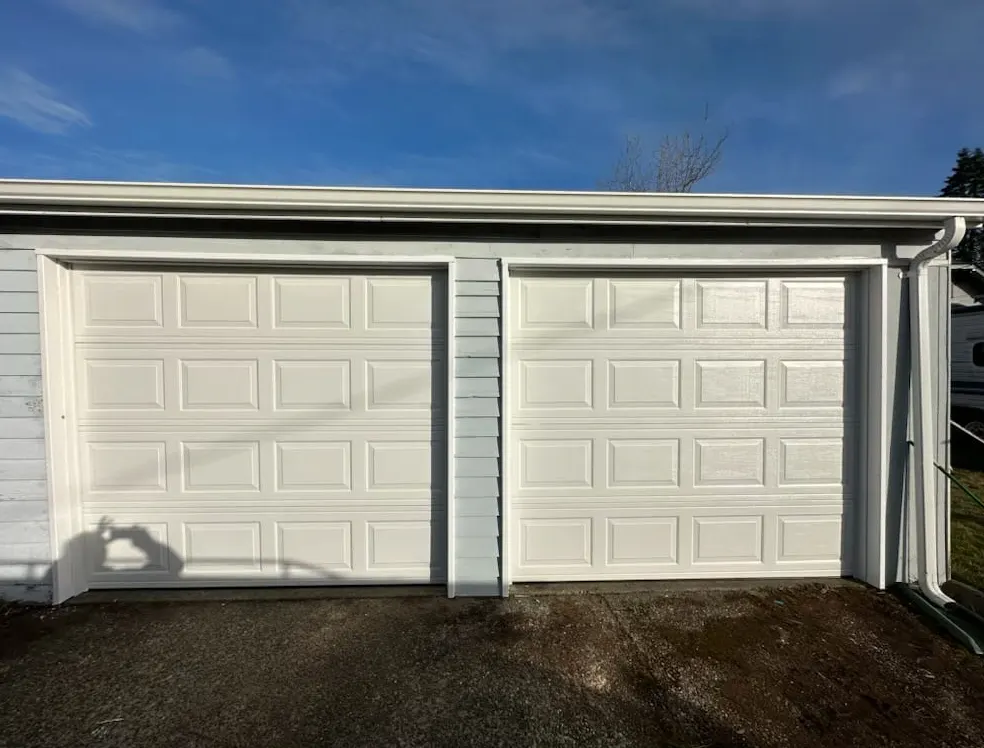
What Another Season of Ignoring This Actually Costs
Leave a gapped or uninsulated garage door alone through one more winter and one more summer, and you're not just losing comfort — you're paying for air you never get to use. If your garage shares a wall with a bedroom, laundry room, or living space, that door is functioning as an exterior wall with a hole in it. Every degree your furnace or AC has to fight to make up for that gap shows up on the utility bill, month after month, whether anyone notices or not.
This is the argument a lot of couples have: one person says the garage door is "just a garage door," the other says it's quietly taxing the HVAC system. Here's the plain version, no guessing involved.
Why an Attached Garage Is Different From a Detached One
In a detached garage, a drafty door is a minor inconvenience. In an attached garage — especially one with a room directly above or beside it — that door is part of your home's thermal envelope. Heat rises and spreads; cold settles and creeps. A door that doesn't seal well lets outside air circulate through the garage, which then pushes through the shared wall, the attic access above the garage, or the door connecting the garage to the house itself.
This matters more here than it might in a drier, milder climate. Heavy rain and humidity swell wood and warp panels over time, which opens gaps that weren't there when the door was installed. Pine debris and moisture around the garage slab can also keep the bottom seal from sitting flush, even on a door that looks fine from the driveway. And when an ice morning hits and temperatures drop fast, any existing gap becomes a direct line for cold air into the house.
What a Leaky Door Does to Heating and Cooling Costs, Specifically
- Winter: Cold air seeping in through a gapped bottom seal or warped panel forces your furnace to run longer to maintain the same indoor temperature, especially in rooms near the garage.
- Summer: An uninsulated steel door in direct sun can push garage temperatures well above outdoor air temperature. That heat radiates through the shared wall, making your AC work harder in adjacent rooms — a real issue given how long and humid the warm season runs here.
- Humidity load: A door that doesn't seal also lets humid outside air into the garage, which your AC then has to manage indirectly if there's any shared ductwork or return air path nearby.
- Year-round: Even on mild days, constant air exchange through a leaky door means your HVAC system is cycling more than it should, which shortens its lifespan along with raising bills.
How to Tell If Your Door Is the Problem
Before spending money, check for the actual symptoms:
- Daylight visible around the edges of the closed door, especially at the bottom corners
- The bottom weatherstripping is cracked, flattened, or doesn't make full contact with the slab
- You can feel a draft standing near the door on a cold or windy day
- The garage feels noticeably hotter or colder than it should relative to the outside temperature
- Panels show warping, gaps between sections, or daylight through the seams
- No insulation on the door itself — just a single layer of steel or wood with nothing behind it
If you're seeing two or more of these, the door is very likely part of your energy problem, not just a comfort annoyance.
What Actually Fixes It (and What's Just a Band-Aid)
Not every fix here requires a new door, but not every fix is permanent either. Here's the honest breakdown:
- Replace the bottom seal (astragal): This is the cheapest, fastest fix and solves the most common leak point — gaps at the floor. It wears out faster in wet climates, so check it yearly.
- Replace side and top weatherstripping: Often overlooked, but gaps along the sides let in just as much air as a bad bottom seal, especially once the door has settled or shifted slightly over the years.
- Add a threshold seal: A rubber threshold on the garage floor itself can stop water and air intrusion that the door seal alone can't catch, particularly useful given how much rain this area gets.
- Insulate the panels: Reflective or foam insulation kits help with heat radiation in summer, but they don't fix an actual air gap — they're a supplement, not a seal replacement.
- Replace the door: If the panels are warped, the door doesn't sit flush anymore, or it's old enough that weatherstripping can't compensate for how poorly it fits the frame, a new insulated door is the real fix. Expect national price ranges for insulated steel doors to run from roughly $900 to $3,000+ installed, depending on size, insulation rating, and style.
When to Call Columbia Garage Door Service
If you've replaced the seals and you're still feeling drafts, or the door itself looks warped, uneven, or won't sit flush no matter what you adjust, that's when it's worth having it looked at. As part of routine Garage Door Maintenance, we check seals, alignment, and panel condition, and tell you honestly whether a seal replacement will solve it or whether you're better off looking at Garage Door Installation with an insulated model built for this climate's heat and humidity swings.
If you're in Columbia, Irmo, Lexington, Blythewood, Elgin, Chapin, West Columbia, or Cayce and tired of guessing why your energy bill keeps climbing, give Columbia Garage Door Service a call — we'll tell you straight whether it's a seal job or a door job, no upsell required.