
What Another Season of Putting This Off Actually Costs
Skip storm prep one more season and you're not just risking a dented door. A garage door that fails under wind pressure doesn't just let weather into the garage — it lets pressure build inside the whole structure, which is how roofs get lifted and walls get pushed outward in high wind events. Add in a wet, humid fall and an ice storm or two this winter, and a door with loose hardware, worn seals, or rusted brackets can turn a routine storm into a repair bill that includes water damage to stored belongings, a warped opener rail, or a door that has to be replaced outright instead of repaired. None of that is unusual here — it's just what happens when a known weak spot gets ignored through hurricane remnant season and into an ice storm.
Why the Garage Door Is Your Home's Weakest Wall
Every other exterior wall in your house is a solid, continuous structure tied into the frame. Your garage door is a large panel of thin steel or aluminum, broken into sections, held in place by rollers riding in a track and a set of hinges and brackets — not studs. It's designed to move, which means it's inherently less rigid than the wall around it. When wind pushes against a garage door with enough force, the door can bow inward or outward between the track supports. If it buckles far enough, it pulls off the track entirely, and at that point you have an open hole the size of a wall facing straight into the storm.
This matters more in this region than people expect, because the Midlands doesn't just get the occasional strong thunderstorm — it also gets the remnants of hurricanes moving inland well after landfall, still carrying sustained wind and heavy rain. A door that's fine in a normal thunderstorm can be exactly the failure point in one of those systems.
Steps to Take Before the Next System Rolls Through
1. Check and Tighten Every Piece of Hardware
Track brackets, hinges, roller brackets, and the fasteners holding the track to the frame all loosen gradually from everyday vibration. In a humid climate, that hardware also rusts, and rust can hide a bolt that's already working its way loose. Walk the full length of both tracks and every hinge, and tighten anything that moves. Replace any bracket or bolt that's visibly rusted through rather than just surface-rusted.
2. Look Into Reinforcement if Your Door Isn't Already Braced
Many older doors, especially ones installed before wind-rated garage doors became standard, have no horizontal or vertical bracing at all — just the panel and the track hardware. Retrofit bracing kits exist, and some newer doors come wind-rated out of the box. If your door is original to an older home, it's worth having it evaluated specifically for wind load, not just general wear.
3. Replace Worn Weatherstripping and Bottom Seals
Heavy, wind-driven rain finds every gap. Cracked or flattened bottom seals and brittle side weatherstripping let water in along the floor and sides, and pine straw and debris can wedge into gaps and hold moisture against the door and track. New seals are inexpensive relative to the water damage they prevent, and they're worth checking every fall before the rain picks up.
4. Check Drainage at the Slab
If water pools against the garage apron instead of running off, that moisture sits against the bottom of the door and the track hardware, accelerating rust and, in a hard freeze, turning into ice right at the point where the door needs to seal and move. A small grading fix or a threshold seal can solve this before it becomes a bigger problem.
5. Plan for Power Loss
Storms and ice both knock out power, and a garage door opener with no backup leaves you stuck using the manual release — which only works if you know where it is and how to use it before you need it. A battery backup for the opener, or at minimum a confirmed, working manual release, should be part of your storm prep, not something you figure out during an outage.
6. Clear Overhanging Limbs
With pine trees common around garages in this area, falling limbs are a real risk in both high wind and ice accumulation. A limb through a garage door panel is a cost you can avoid with a trim before storm season peaks rather than a repair after it hits.
When to Call Columbia Garage Door Service
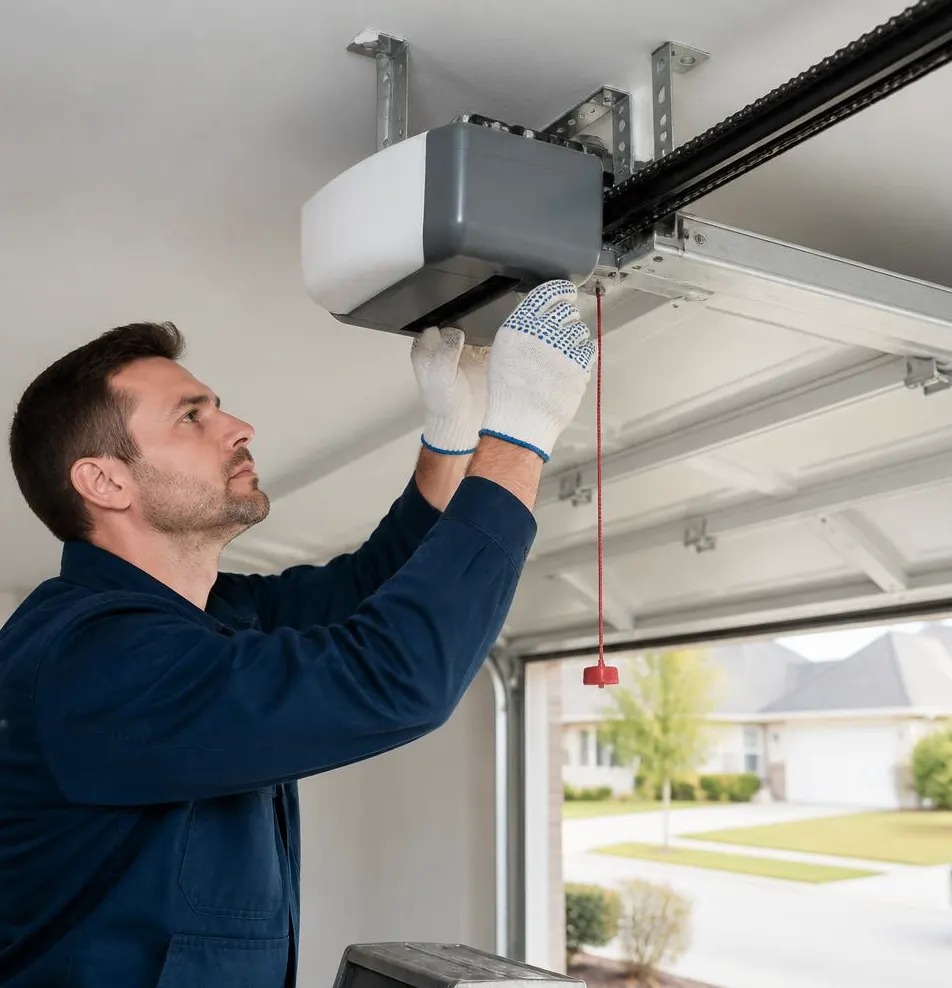
If you've checked your hardware and seals and found rust, sagging panels, a door that shudders or bows in wind, or you're simply not sure whether your current door can handle a real wind event, that's the point to call in a technician rather than guess. Columbia Garage Door Service can run a full inspection as part of a Garage Door Maintenance visit — tightening hardware, replacing seals, and checking the track and springs for wear — or, if your door is older and undersized for the wind it's seeing, walk you through options for a Garage Door Installation with a wind-rated door built for this kind of weather.
Columbia, Irmo, Lexington, Blythewood, Elgin, Chapin, West Columbia, and Cayce homeowners who want their garage door ready before the next storm system or ice event moves through can call Columbia Garage Door Service today to schedule an inspection.