
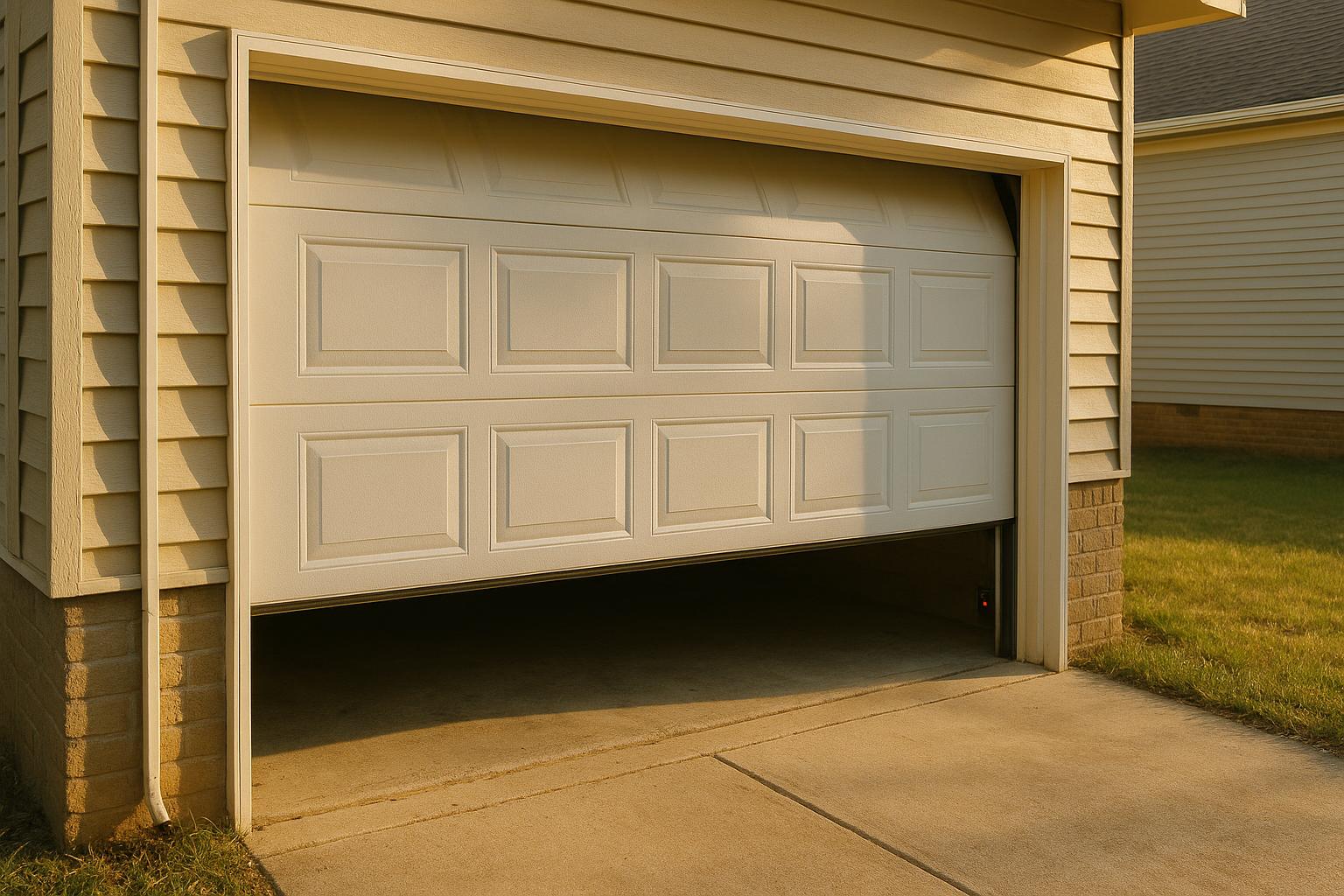
That Frustrating Moment When Your Garage Door Won't Stay Closed
You press the button on your remote, watch the garage door start its descent, and then — just before it reaches the floor — it reverses and goes right back up. You try again. Same thing. Maybe you try holding the wall button down, and it still won't cooperate.
This is one of the most common garage door complaints we hear from homeowners across Columbia, and it's more than just an annoyance. A garage door that won't fully close is a security risk, an energy efficiency problem, and an open invitation for pests, rain, and humidity to enter your garage. The good news is that the cause is usually identifiable and fixable — often without replacing the entire system.
Let's walk through the most common reasons your garage door reverses before hitting the floor and what you can do about each one.
1. Misaligned Safety Sensors
This is the number one cause of a garage door that reverses before closing, and it's the first thing we check on nearly every service call. Since 1993, federal law has required all automatic garage door openers to include photo-eye safety sensors mounted near the bottom of the door tracks on both sides. These sensors send an invisible beam across the opening, and if anything breaks that beam — a child, a pet, a trash can — the door reverses to prevent injury.
The problem is that these sensors can become misaligned over time. A bump from a bicycle, a lawnmower vibration, or even settling of the garage structure can knock one sensor slightly out of alignment. When the sensors can't "see" each other, the opener interprets this as an obstruction and reverses the door.
What to look for:
- Check the small LED lights on each sensor. On most models, both lights should be solid (not blinking).
- A blinking light usually indicates the receiving sensor isn't detecting the beam from the sending sensor.
- Look for obvious obstructions like cobwebs, dirt, or leaves covering the sensor lenses.
What you can do:
Gently clean the sensor lenses with a soft cloth. If the light is still blinking, try carefully adjusting the sensor bracket until the light becomes solid. If you've tried these steps and the problem persists, the sensor wiring may be damaged or the sensors themselves may need replacement — that's when it's time to call a professional.
2. The Close-Limit Switch Needs Adjustment
Your garage door opener has settings called limit switches that tell the motor exactly how far the door should travel when opening and closing. If the close-limit is set incorrectly — telling the door to travel farther than the actual distance to the floor — the opener thinks the door has hit something and triggers the auto-reverse safety feature.
This issue often shows up after a new opener installation, a spring replacement, or even seasonal temperature changes that cause slight expansion or contraction of the garage door tracks and hardware.
What you can do:
Most modern openers have limit adjustment screws or digital settings accessible on the motor unit. Your owner's manual will explain how to make small adjustments. We recommend making changes in small increments — a quarter turn at a time — and testing after each adjustment. If you're not comfortable working with these settings, our team can dial it in quickly during a maintenance visit.
3. Worn or Broken Garage Door Springs
Your garage door springs do the heavy lifting — literally. They counterbalance the weight of the door so the opener motor doesn't have to work as hard. When springs wear out or break, the door becomes significantly heavier. The opener motor strains against this extra weight, and the built-in force sensor may interpret the resistance as an obstruction, causing the door to reverse.
If your door feels unusually heavy when you try to lift it manually, or if you heard a loud bang from the garage recently, a broken spring is likely the culprit. Here in Columbia, the heat and humidity can accelerate spring fatigue, especially on doors that get heavy daily use.
Important safety note: Garage door springs are under extreme tension and can cause serious injury if handled improperly. Spring replacement is not a DIY job. If you suspect a spring issue, please call a trained technician.
4. Something Is Physically Blocking the Door
Before diving into mechanical troubleshooting, take a careful look at the door's path. Sometimes the answer is simpler than you'd expect. Small objects near the bottom of the door — a rock, a child's toy, a piece of debris — can trigger the safety reverse. The door's bottom seal or weatherstripping can also become warped or bunched up, creating just enough resistance to activate the auto-reverse.
Also inspect the tracks on both sides of the door. Dents, debris buildup, or rust in the tracks can cause the rollers to bind, which the opener may interpret as an obstruction. Tracks that have shifted out of alignment can create the same problem.
5. The Opener's Force Setting Is Too Low
Garage door openers have an adjustable force setting that determines how much resistance the motor will push through before reversing. If this setting is too low, the door may reverse from normal friction — especially on older doors or during Columbia's humid summer months when weatherstripping can become sticky.
You can typically adjust the downward force using a dial or screw on the opener unit. Again, make small adjustments and test carefully. You want the door to close fully but still reverse if it encounters real resistance, so don't crank the force setting to maximum.
6. Damaged or Worn Rollers and Hinges
Over time, the rollers that guide your door along the tracks can wear flat, crack, or seize up. Worn hinges can also create binding points. When the door encounters this extra friction during its downward travel, the opener's safety system may kick in and reverse the door.
Listen for grinding, scraping, or squealing sounds during operation. These are telltale signs that your rollers or hinges need attention. Nylon rollers tend to last longer and run quieter than steel rollers, and upgrading to them is a worthwhile investment during a maintenance visit.
When to Call a Professional
Some of these issues — cleaning sensors, checking for obstructions, making small limit adjustments — are reasonable for a handy homeowner to tackle. But many garage door problems involve components under high tension or electrical systems that require professional expertise.
You should call a garage door technician if:
- You suspect a broken or weakening spring
- The door is visibly off-track or crooked
- Sensor realignment doesn't solve the reversing problem
- You hear unusual grinding or popping sounds
- The opener motor runs but the door doesn't move
At Columbia Garage Door Service, we troubleshoot reversing doors regularly for homeowners in Columbia, Irmo, Lexington, Blythewood, and surrounding communities. We'll diagnose the exact cause, explain your options clearly, and get your door working properly — usually in a single visit.
Prevention Is Easier Than Repair
Most garage door reversing issues can be prevented with basic annual maintenance. A professional tune-up includes lubricating moving parts, inspecting springs and cables, testing safety sensors, checking track alignment, and adjusting opener settings. Think of it like an oil change for your garage door — a small investment that prevents bigger headaches down the road.
If your garage door is giving you trouble, don't ignore it and don't keep pressing the button hoping it will magically fix itself. Give us a call, and we'll get it sorted out the right way.