
The short answer
If your garage door won't move at all, it's almost always ice gluing the bottom seal to the concrete, not a mechanical failure. If it opens but feels sluggish, jerky, or like it's straining, that's usually thickened lubricant or a spring working harder than it should in cold metal. Neither one means your opener is dying — but both deserve a quick, correct diagnosis before you force anything.
Symptoms to watch for
- Door looks like it's locked — opener hums or clicks but the door doesn't lift
- Visible frost or a thin ice line where the bottom panel meets the slab
- Door opens, but noticeably slower than normal, or in jerky starts and stops
- Door gets partway up and reverses back down
- New grinding, squeaking, or scraping that only shows up on cold mornings
- Remote works fine on other things, but the garage door opener seems weaker than usual
A Midlands-specific wrinkle
Columbia doesn't get hard freezes often, but when hurricane remnants or a heavy rain system move through right before a cold snap, water can pool under the door and freeze overnight. That's the setup for a fully iced-shut door, even in a climate that's mild most of the year.
What a technician checks, in order
1. Ice bonding the bottom seal to the slab
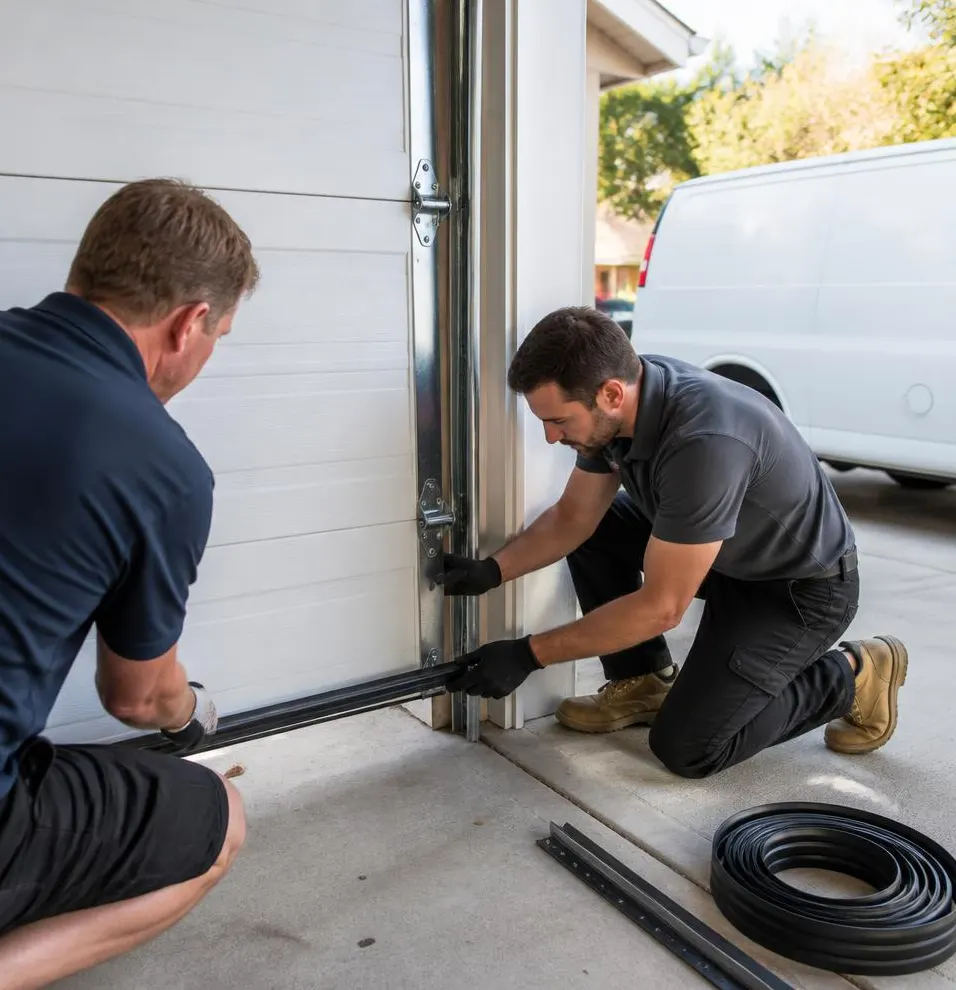
This is the most common cause and the first thing worth ruling out. The rubber weatherstripping along the bottom of the door sits in a puddle, freezes overnight, and bonds to the concrete like a seal. Don't run the opener repeatedly — that strains the motor and gears against an immovable door. Instead, warm the ice line with warm (not boiling) water or a hair dryer, let it loosen, and break the seal by hand before using the opener.
2. Thickened lubricant on rollers, hinges, and tracks
Standard grease and old lubricant stiffen in cold temperatures, dragging on rollers and hinges. This shows up as slow, uneven movement rather than a dead stop. The fix is straightforward: clean off the old buildup and reapply a lubricant rated for garage door hardware and cold weather, not household oil, which attracts more dust and pollen than it repels.
3. Springs working harder in cold metal
Torsion and extension springs lose a small amount of elasticity when metal contracts in the cold, so the opener has to pull harder to lift the same door. If the door is already near the end of its spring life, a cold morning is often what exposes it — sluggish movement, more strain noise, or reversing partway up. A technician checks spring balance and tension before anything else mechanical, since a marginal spring is a safety issue, not just a performance one.
4. Opener force settings out of calibration
If the door load has shifted — from spring wear, a slightly swollen weatherstrip, or seasonal changes — the opener's travel and force limits may need resetting so it doesn't strain or trigger safety reversal.
5. Weatherstripping and track condition
Humidity and pine debris common around Columbia garages can swell weatherstripping or leave grit in the tracks, adding resistance that's barely noticeable in summer but obvious once things stiffen up in the cold. Replacing worn seals and clearing track debris often solves lingering sluggishness after the ice itself has melted.
When to call Columbia Garage Door Service
If your door is iced shut more than once a season, reverses unexpectedly, or still feels sluggish after the cold snap passes, it's worth a proper look rather than repeated force on the opener. We handle garage door maintenance tune-ups to clean and relubricate hardware before winter weather settles in, and we check spring tension as part of every service call so a cold-weather strain doesn't turn into a sudden spring failure. If a spring is the culprit, we handle spring replacement with the correct size and tension for your door, not a generic swap.
Give us a call and we'll get your garage door moving the way it should — reliable service for homes and businesses across Columbia, Irmo, Lexington, Blythewood, Elgin, Chapin, West Columbia, and Cayce.