
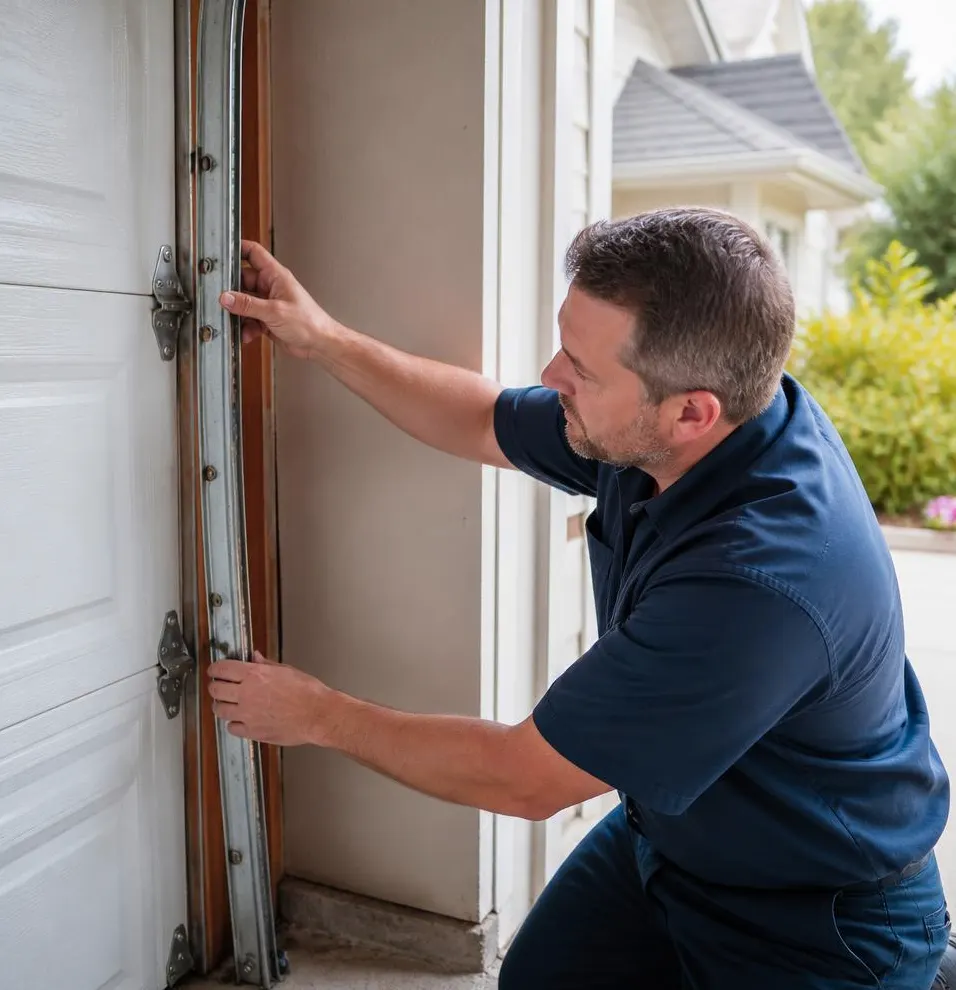
What a Technician Sees This Time of Year
A typical fall service call starts the same way: the homeowner noticed the door felt "off" after the first real cold morning. Maybe the door is harder to lift by hand, maybe there's a gap of daylight along the bottom even though the door looks closed, or maybe the opener is grinding where it used to be smooth. None of this happened overnight. It built up all summer, through the humidity, the pollen, the afternoon thunderstorms, and now the first cold snap is just the thing that finally makes it obvious. Winter in the Midlands isn't brutal, but it is the season that exposes every corner that got cut during the warmer months.
Check the Weatherstripping Before the Weather Changes Your Mind For You
The rubber seal along the bottom of the door and the vinyl strips along the sides take a beating from months of heat and humidity. By fall, a lot of it has gone stiff, cracked, or pulled loose from the track. That matters more in winter than people expect, because a gap under the door isn't just a draft problem, it's an entry point for wind-driven rain during a cold front and a welcome mat for mice and bugs looking for somewhere dry and warm.
- Run your hand along the bottom seal and side stops, feeling for cracks, flattened spots, or sections pulling away from the frame.
- Close the door during daylight and look for light coming through at the bottom corners or along the sides.
- Replace worn seals now rather than waiting until an ice storm, when exposed concrete and a drafty garage make everything inside colder, including any pipes or equipment stored near the door.
Cold Changes How Your Springs and Hardware Behave
Torsion springs lose a little tension as temperatures drop, and metal hardware that's been fine all summer can suddenly feel stiff or noisy once the mornings turn cold. If your door has felt heavier than usual when you lift it manually, or the opener strains more than it used to, that's often the combination of cold metal and months of accumulated grime rather than a sign the springs are about to fail outright. Still, this is exactly the wrong time to ignore a spring that sounds strained, since a spring under tension that lets go is dangerous no matter the season.
While you're at it, check the rollers and hinges. Humidity and the pollen that coats everything here in spring and summer leave a residue that mixes with moisture and turns gritty. That grit works into the roller bearings and hinges, and once cold weather stiffens the metal further, you get the grinding or squealing that makes people assume the opener is failing when it's really just dry, dirty hardware.
A Simple Lubrication Routine
- Use a silicone-based garage door lubricant, not WD-40, on hinges, rollers, and the torsion spring itself.
- Wipe down the tracks first to remove built-up pollen and dust before lubricating, so you're not just trapping grit in grease.
- Do this before the first cold stretch rather than after you've already noticed noise, since cold hardware is harder to work with and more likely to bind.
Power Outages Happen Here Too
Columbia doesn't get the ice storms a mountain town gets, but the Midlands does see them often enough that an ice-coated tree limb taking down a power line isn't a rare event. If your opener doesn't have a battery backup, a winter outage means you're stuck manually releasing the door, which is fine if you know how to do it and inconvenient if you don't. Locate the manual release cord now, make sure it's not tangled or painted over, and consider a battery backup opener if you don't already have one. It's a small upgrade that matters most on the one night you actually need it.
Insulation and Condensation
If your garage connects to living space, or you use it as a workshop, an uninsulated door lets a lot of cold radiate through on frosty mornings. Insulated panels or a retrofit kit help, but so does something simpler: check for condensation on the inside of the door after a cold night. A little moisture is normal given how humid this region stays even into winter, but heavy condensation combined with rust spots on the bottom panel is a sign water has been sitting there for a while, which eventually weakens the metal or the wood composite, depending on your door.
When to Call Columbia Garage Door Service
Most of what's above is a Saturday afternoon job. But if the door feels noticeably heavier than it used to, if you hear a pop or bang when it moves, or if the opener is straining and reversing unpredictably, stop running it and call. Those are spring and hardware issues that get worse, not better, once cold weather sets in, and they're not worth troubleshooting yourself given the tension involved. Columbia Garage Door Service handles both Spring Replacement and full Garage Door Maintenance visits, where a technician checks the springs, cables, rollers, tracks, and opener settings in one trip and catches the small issues before they turn into a no-start morning in January. If your opener is the one piece that's never been upgraded, that same visit is a good time to talk through Garage Door Opener Installation & Repair options, including battery backup units built for exactly the kind of outage a Midlands ice storm can cause.
If your garage door has felt off since the weather turned, don't wait for the first hard freeze to find out why. Call Columbia Garage Door Service and get it handled before winter does it for you.